- London, UK
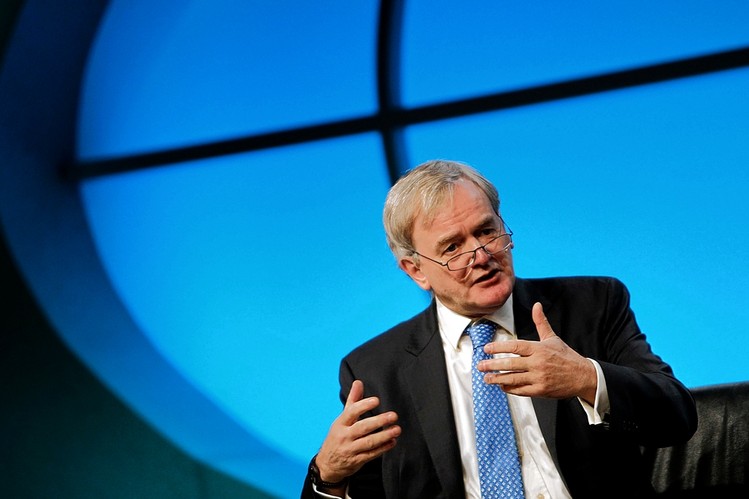
Stuart Kirk Keynote Speaker
- Columnist in the Financial Times
- Former Global Head of Responsible Investments at HSBC
- Former Global Head of Multi-Asset and Thematic Research at Deutsche Bank
Stuart Kirk's Biography
Stuart Kirk is one of the best speakers and presenters in business and finance, having wowed global audiences and clients for more than two decades with his rare blend of original insights and humour. Obsessed with the power and importance of oratory since his presidency of the prestigious Cambridge debating society, Stuart passionately believes in delivering “the best speech I’ve ever heard” each and every time.
His unique background, as a renowned journalist, investor, management consultant and éminence grise to CEOs the world over, means he can talk with authority on a huge range of topics: from the secrets of corporate leadership to how watching sheep can boost investment returns.
No wonder Stuart currently pens a hugely popular weekend column in the Financial Times. He also edited the paper’s famous Lex column for many years. He is a daily presence on TV and radio from New York to Sydney.
His recent roles in banking and asset management were equally high-profile, being hired specifically to publish original and thought-provoking content on finance and macroeconomics, big-picture themes, as well as sectors and individual companies. From 2012 to 2022, Stuart was global head of multi-asset and thematic research at Deutsche Bank, head of the Research Institute at DWS, and most recently, global head of research and insights and responsible investing at HSBC Asset Management.
As well as his day job at Deutsche, he worked directly as a close advisor to the chief executive, penning his briefing notes, speeches and presentations. It is no fluke that this CEO was regularly seen as the “smartest guy in the room”. While there, Stuart also wrote and edited one of the most widely read research reports on Wall Street, and his weekly publication at his next employer, HSBC, was much-loved by both retail, wealth and institutional clients across Europe and Asia.
At all these firms Stuart was the go-to person for keynote addresses at flagship conferences as well as intimate talks to high-net worth clients or big institutions. His following comes from presenting deep analysis – always with actionable takeaways – engagingly. Public speaking is only half Stuart’s speciality, however. He does a huge amount of private speaking too: advice to company boards, strategy sessions with senior management teams, or motivational speeches to all employees. He has taught an entire company how to write properly in 45 minutes.
Advisory and confidential in nature, Stuart’s internal presentation skills were learned as a senior management consultant in Oliver Wyman’s highly regarded financial services practice, working on projects ranging from strategy reviews for global investment banks to restructuring the world’s largest sovereign wealth funds.
Ultimately Stuart is revered by audiences because he is credible. He can talk about investing having run billions of dollars as a portfolio manager. His research and strategic advice are sound because he was an analyst and consultant. Stuart works in the media so understands messaging and communications. Most importantly of all, though, Stuart is listened to because he can pierce the noise and see far into the future. He is not contrarian for the sake of it, but regularly seems to understand the way the world is moving before anyone else.
Clients and audiences enjoy the privilege of hearing things first. But sometimes Stuart being ahead of the game has repercussions, such as the widely-reported fall-out following his polemical speech in 2022 at a Financial Times conference. He suggested – without choosing his words carefully enough, perhaps – that the risk to investment returns from climate change was over-done, sustainable finance had obvious flaws to fix, and that central banks should stick to worrying about growth and inflation. The speech went viral and is now considered by financial historians to be the moment when ESG’s pendulum began to swing the other way. What one prominent journalist called “the most watched PowerPoint presentation” ever is approaching a quarter or a million views on You Tube alone. Overnight Stuart was unwittingly a major general in the culture wars, generating acres of newspaper copy, hours of television debate, and a zillion Tweets. Even US senators weighed in. Two years later however, Stuart is universally seen to have been correct and ahead of his time.
Stuart Kirk's Speaking Topics
-
Macroeconomics, finance and markets
- Why a productivity miracle is around the corner and how to profit from it - What economic data matter for companies and what don’t? - How covid changed everything when it comes to economics - The next 50 years: economics and finance is increasingly about power - The importance of not confusing macro with markets
-
Investing and wealth creation
- What are the biggest misconceptions in investing? - Investing mistakes and how to avoid them - Secrets that professional investors don’t want you to know - What will be the top investment themes over the next decade? - The grown-up way to think about ESG and sustainability - How to have a positive impact while making money - Why investors look at macro data the wrong way around
-
Corporate strategy and shareholder value
- Killing the octopus: how to avoid turning your company inside out - The top 5 secrets to making your share price fly - How to become more like a US company (without importing the bad bits) - The outside-in view: how do portfolio managers, analysts and journalists look at companies? - The 5 ways to counter an activist or unwanted takeover bid
-
Leadership and motivation
- The top five CEOs I’ve ever worked with and what you can learn from them - You will never make them love you – but how to stop making your staff hate you - How to motive your employees without your shareholders revolting - Why walking the talk matters and what leaders always get wrong - I’ve interviewed a thousand CEOs – here is what they said they wished they’d known long ago
-
Media perspectives on companies
- How does the financial press look at companies such as yours? - What are the tricks to making the financial press like you and your company? - The right and wrong way to do external corporate communications - Company narratives and why they matter so much - The best way to present your financial numbers and what journalists hate
-
Sustainability and ESG best practice
- What are the most common misconceptions around sustainability? - How companies should really be thinking about sustainability - What is ESG best practice for investors and public companies alike? - How to fight off a reputational attack from the green lobby and survive - Leadership teams and sustainability: what to focus on and what not to - How do the best ESG investors make it work for them?
-
Board and senior executive advisory
- What investors really think about boards and what you can do about it - The ten most common mistakes company leadership teams make - Which metrics do sophisticated investors really look at and how to manage them - Stop listening to your internal comms team: why senior executives can and should take more risks - What boards should really be on the lookout for and why the seldom are - What is the secret to a successful and stable senior leadership team?
-
Writing and speaking masterclasses
- One simple writing trick that will put you instantly in the top 1 per cent - Why are newspapers easier to read than analyst reports? It’s not what you think. - Turbocharge your company communications: make everyone in your firm beautiful writers in 30 minutes. - The science and art of the perfect presentation
Why Book Stuart Kirk as a speaker?
-
He brings rare credibility as a former Global Head of Responsible Investment at HSBC Asset Management, with first-hand insight into how the world’s biggest institutions price risk and allocate capital.
-
He challenges leaders to cut through ESG noise and climate-risk groupthink, helping boards separate evidence-based risk from headline-driven narratives.
-
He translates complex market dynamics, from inflation and interest rates to valuations and asset bubbles, into clear implications for strategy, investment and decision-making.
-
He draws on a career spanning banking, asset management and financial journalism, including writing for the Financial Times, to deliver sharp analysis that lands with senior audiences.
-
He equips executives with a more rigorous framework for thinking about uncertainty, regulation and long-term risk, enabling more confident conversations with investors, employees and stakeholders.
Videos of Stuart Kirk


Articles, Media & Podcasts
Check Stuart Kirk's speaking fees and availability
Discover other speakers