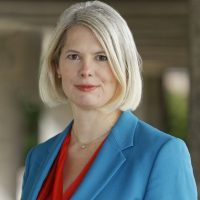
Rumman Chowdhury Speaker

Rumman Chowdhury Keynote Speaker

  • Former Director of META (ML Ethics, Transparency, and Accountability) at Twitter
  • Responsible AI Fellow at the Berkman Klein Center for Internet & Society at Harvard University
  • United States Science Envoy for Artificial Intelligence (2024-2025)

Rumman Chowdhury's Biography

Dr. Rumman Chowdhury is a data scientist and social scientist, and CEO and co-founder of the tech nonprofit Humane Intelligence, which builds a community of practice around community-driven AI auditing and evaluations of AI models. She was previously the United States Science Envoy for Artificial Intelligence (2024-2025), engaging in global AI governance efforts with a focus on emerging markets, and a Responsible AI Fellow at the Berkman Klein Center for Internet & Society at Harvard University.

Previously, Rumman was the Director of META (ML Ethics, Transparency, and Accountability) at Twitter. There she led a team of applied researchers and engineers to identify and mitigate algorithmic harms on the platform. By applying algorithmic ethics and creating socio-technical solutions, she strived to make Twitter more transparent and accountable.

Rumman was also the Global Lead for Responsible AI at Accenture Applied Intelligence, where she created the Fairness Tool, a first-in-industry algorithmic tool to identify and mitigate bias in AI systems.

Dr. Chowdhury’s passion lies at the intersection of artificial intelligence and humanity. She hopes to cultivate and grow the next wave of technology-forward companies to use emerging technologies responsibly. Deeply engaged in AI global policy, Rumman Chowdhury serves as a trusted advisor to international organizations on AI policy and ethics.

Rumman regularly lends her thoughts and contributes to the Atlantic, Forbes, Harvard Business Review, Sloan Management Review, MIT Technology Review and VentureBeat. She has been featured on the Wall Street Journal, New York Times, Financial Times, BBC, and other international media outlets. In 2017, Dr. Chowdhury was named one of BBC’s 100 Women and in 2018, named by Forbes as one of Five Who Are Shaping AI. She has been recognised as one of Bay Area’s top 40 under 40, and named one of Time’s 100 most Influential People in AI.

Rumman Chowdhury is an internationally recognised speaker on artificial intelligence, the future of work, and technology ethics. She has two undergraduate degrees from MIT, a master’s degree in Quantitative Methods of the Social Sciences from Columbia University, and a PhD/doctorate in political science from the University of California, San Diego.

Read More

Videos of Rumman Chowdhury

Moral Outsourcing: Humanity in the age of AI | TEDxOccidentalCollege
Rebooting AI from the Ground Up
Can AI be held accountable? AI ethicist on tech giants and the AI boom
Security as Part of Responsible AI: At Home or At Odds?

Articles, Media & Podcasts

Check Rumman Chowdhury's speaking fees and availability

Discover other speakers

Jonnie Penn
Jonnie Penn Speaker
Exclusive
Jonnie Penn
AI expert & historian of technology
Jacob Silverman Speaker
Exclusive
Jacob Silverman
Writer and author focusing on technology’s impact on society
Nathan C. Walker Speaker
Exclusive
Nathan C. Walker
Founder of the AI Ethics Lab at Rutgers University, Former Expert AI Trainer at OpenAI
Henrik von Scheel speaker
Henrik von Scheel Speaker
Exclusive
Henrik von Scheel
Leading strategist, Futurist and Industry 4.0 Originator
Gina Neff Speaker
Exclusive
Gina Neff
Technology Expert & Professor of Responsible AI
Laurence Kotlikoff Speaker
Exclusive
Laurence Kotlikoff
Economist & Expert on Global Macroeconomics and Economic Policy
Maike Osborne Speaker
Exclusive
Maike Osborne
Professor of Machine Learning at Oxford University. Co-founder and Chief Science Officer of Mind Foundry Ltd
Lauri Love Speaker
Exclusive
Lauri Love
Professional hacker, cybersecurity expert & political activist
Catherine Ball Speaker
Exclusive
Catherine Ball
Scientific Futurist 
Gregory Mone Speaker
Exclusive
Gregory Mone
Former technology columnist at Popular Science