- USA
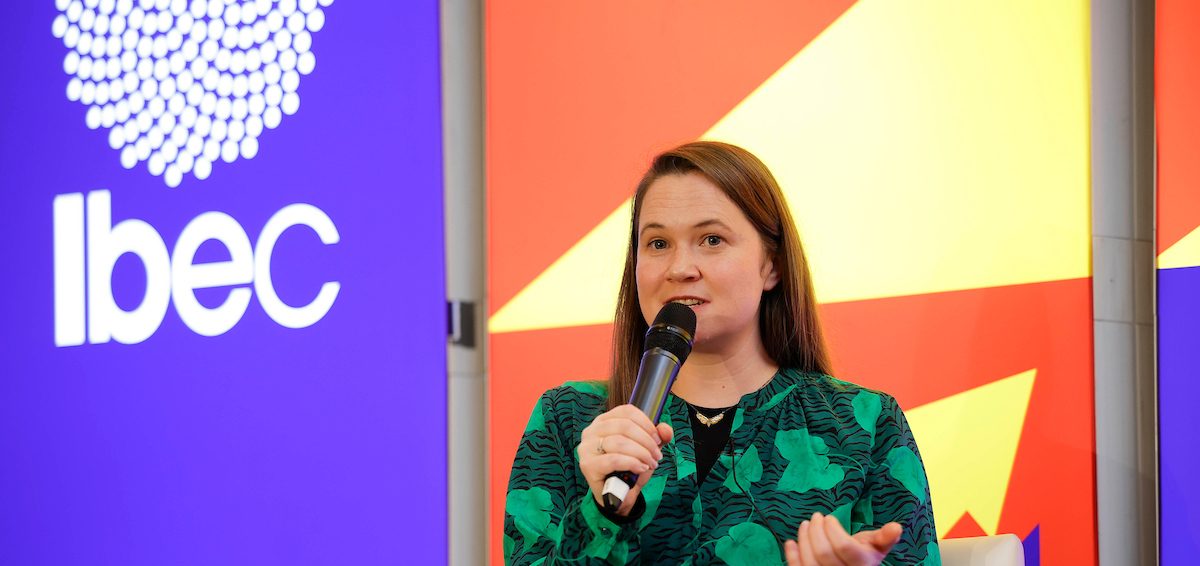
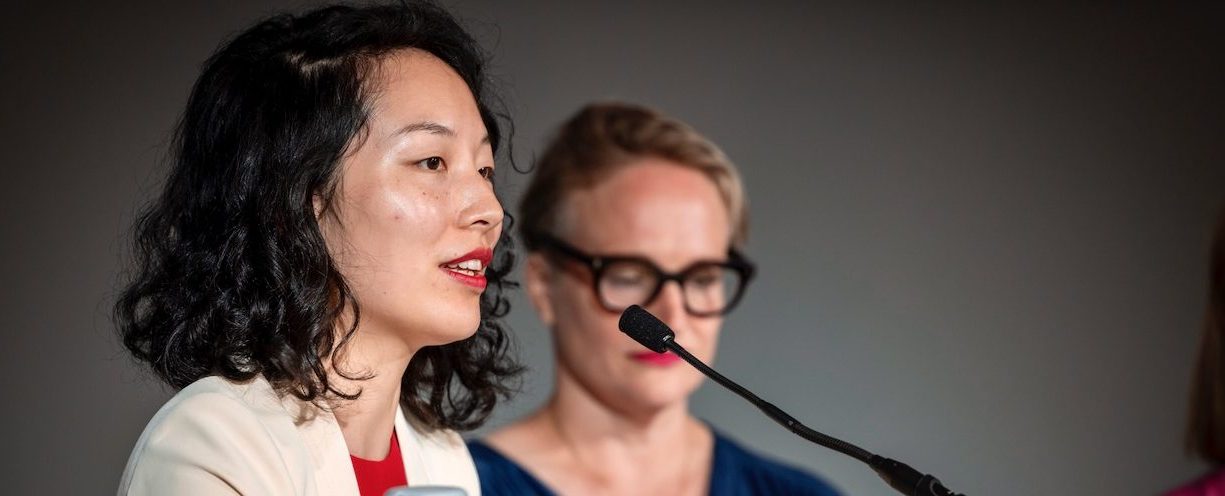
Minouche Shafik Keynote Speaker
- President of Columbia University 2023-2024
- Deputy Governor of The Bank of England (2014 – 2017)
- Chief Economic Advisor to the Chief Economic Advisor to the Prime Minister of the United Kingdom (2025-2026)
Minouche Shafik's Biography
Baroness Nemat (Minouche) Shafik, was Chief Economic Advisor to the UK Prime Minister until July 2026. Previously she served as President of Columbia University from 2023-2024. She is a distinguished economist who for more than three decades has served in senior leadership roles across a range of prominent international and academic institutions.
Shafik was born in Alexandria, Egypt. When she was 4 years old, her family fled the country during the political and economic upheaval of the mid-1960s. Her father, a scientist, found work in the United States, where he had done his PhD. Shafik and her sister attended numerous schools in Florida, Georgia, and North Carolina, and she graduated summa cum laude and Phi Beta Kappa from the University of Massachusetts-Amherst with a Bachelor of Arts in economics and politics in 1983. She was awarded a Master of Science in economics from the London School of Economics and Political Science (LSE) in 1986, followed by Doctor of Philosophy in economics from St Antony’s College, Oxford University, in 1989.
Following her Oxford years, Shafik began her career at the World Bank. By age 36, she had become the bank’s youngest-ever vice president. During the early 2000s, she held academic appointments at the Wharton Business School of the University of Pennsylvania and the Economics Department at Georgetown University. In 2008, she was appointed Permanent Secretary of the U.K.’s Department for International Development, where she led an overhaul in British foreign aid. Next, she served as Deputy Managing Director of the International Monetary Fund and then as Deputy Governor of the Bank of England, where she sat on all the monetary, financial, and prudential policy committees and was responsible for a balance sheet of over £500 billion (equivalent of approximately $605 billion). In 2017, she returned to academia as president of the London School of Economics and Political Science.
Throughout her career, Shafik has been at the center of efforts—often during pivotal, high-stakes moments—to address some of the world’s most complex and disruptive challenges. At the World Bank, she worked on the institution’s first-ever report on the environment and later advised governments in Eastern Europe after the fall of the Berlin Wall. At the height of the “Make Poverty History” campaign, Shafik helped secure the UK’s commitment to giving 0.7% of GDP in aid and focused it on fighting poverty in the poorest countries in the world. She worked on both the European debt crisis and the Arab Spring while she was at the IMF. At the Bank of England, she led work on fighting misconduct in financial markets and was responsible for the contingency planning around the Brexit referendum. At LSE, she has encouraged academic work on how to rethink the social contract for the modern economy.
“I have had jobs that are about doing good, such as fighting poverty or leading educational institutions as well as jobs that are about preventing bad things from happening, like at the IMF and Bank of England,” Shafik has said of her career. “Both are vital if we are to make and secure progress for humanity.”
Shafik has authored, edited, and co-authored a number of books and articles. In her writings and speeches, she has been clear eyed in how leading global institutions must transcend technocratic expertise to engage more fully with the people they serve. She has called for a better social contract to underpin our economic system, most notably in her recent book, What We Owe Each Other: A New Social Contract (2021, Princeton University Press), in which she challenges institutions and individuals to rethink how we can better support each other to thrive. In addition, she has written articles for a number of publications, including Oxford Economic Papers, Columbia Journal of World Business, The Middle East Journal, Journal of African Finance and Economic Development, World Development, and the Journal of Development Economics. Shafik serves or has previously served on numerous boards including as Deputy Chair of the Trustees of the British Museum, board member of the Supervisory Board of Siemens, the Bill and Melinda Gates Foundation the Council of the Institute for Fiscal Studies, and BRAC. In recognition of her public service, she was made a Dame Commander by Queen Elizabeth II in 2015 and a cross-bench peer in the House of Lords in 2020. She is also an Honorary Fellow of the British Academy, St Antony’s College at Oxford University, and a Fellow of the Academy of Social Sciences.
She was awarded Honorary Doctorates from the University of Warwick, the University of Reading, the University of Glasgow, and the American University in Beirut, and was selected “Woman of the Year” at the Global Leadership and Global Diversity awards in 2009. She also was named Forbes “100 Most Powerful Women” in 2015, “100 Women in Finance European Industry Leader” in 2018, and “100 Most Influential Africans” in 2021 by New African magazine.
Minouche Shafik's Speaking Topics
-
Economy and finance
-
Macroeconomics
-
Financial education
Videos of Minouche Shafik


Check Minouche Shafik's speaking fees and availability
Discover other speakers