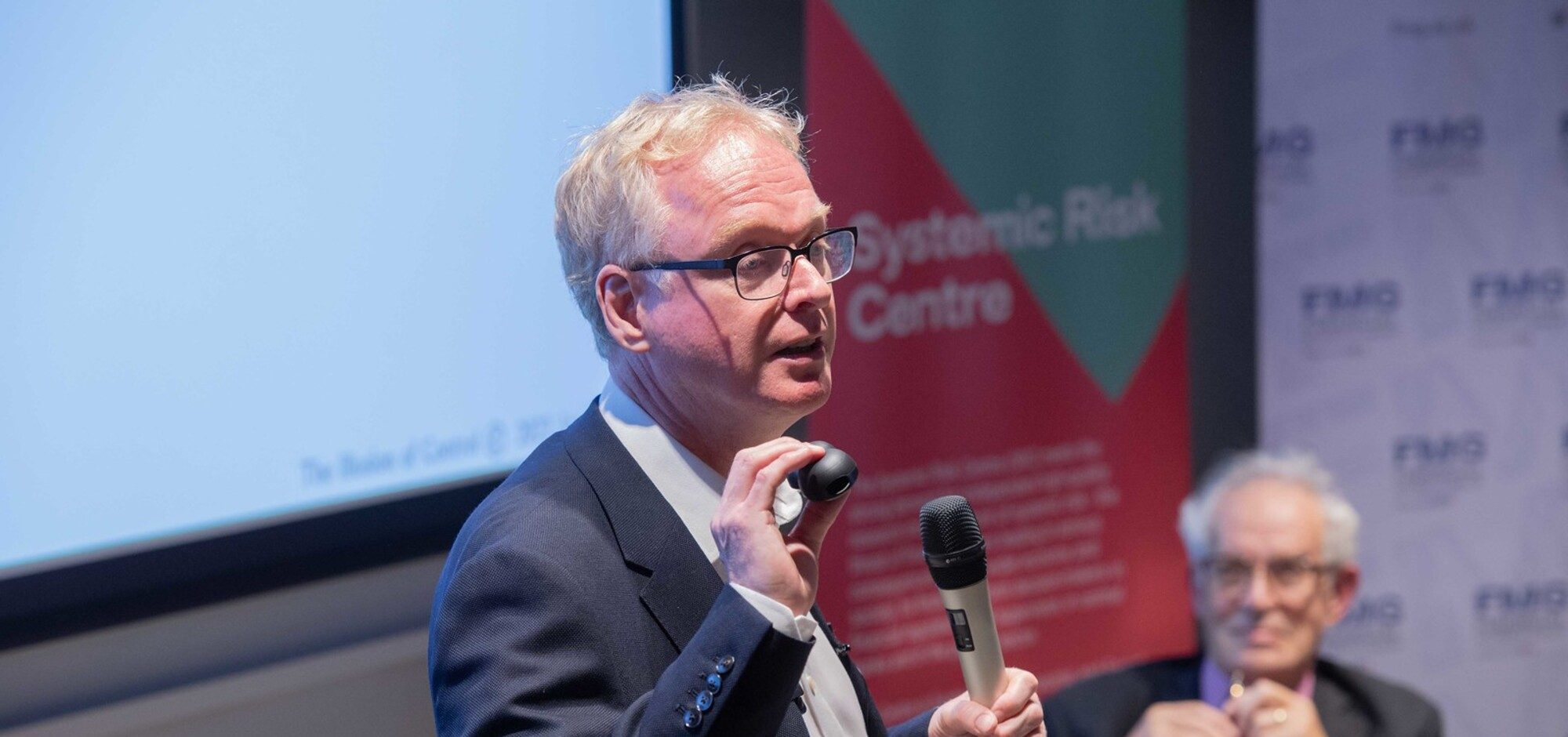
Mark Zandi Keynote Speaker
- Chief Economist at Moody's Analytics
- Author of “Financial Shock”
- Influential source of economic analysis for businesses, journalists and the public
Mark Zandi's Biography
Mark Zandi is chief economist of Moody’s Analytics, where he directs economic research. Moody’s Analytics, a subsidiary of Moody’s Corp., is a leading provider of economic research, data and analytical tools. Dr. Zandi cofounded Economy.com, which Moody’s purchased in 2005.
Dr. Zandi is on the board of directors of MGIC, the nation’s largest private mortgage insurance company, is the lead director of PolicyMap, a data visualization and analytics company used by policymakers and commercial businesses, and is a director of the Coleridge Initiative, a nonprofit that facilitates the exchange of data across governments.
He is a trusted adviser to policymakers and an influential source of economic analysis for businesses, journalists and the public. Dr. Zandi frequently testifies before Congress and conducts regular briefings on the economy for corporate boards, trade associations and policymakers at all levels.
Dr. Zandi is the author of Paying the Price: Ending the Great Recession and Beginning a New American Century, which assesses the monetary and fiscal policy response to the Great Recession. His other book, Financial Shock: A 360º Look at the Subprime Mortgage Implosion, and How to Avoid the Next Financial Crisis, is described by The New York Times as the “clearest guide” to the financial crisis. Dr. Zandi is host of the Inside Economics podcast.
Dr. Zandi earned his BS from the Wharton School at the University of Pennsylvania and his PhD at the University of Pennsylvania.
Mark Zandi's Speaking Topics
-
The Great Recession: A Changed Landscape.
Everything about the economic downturn that began in December 2007 has been out of the ordinary. The same will be true of the recovery. The excesses that led to the worst U.S. recession since the Great Depression mean that markets as well as the regulatory environment will emerge substantially altered. Consumer spending, saving habits, credit markets, the composition of the labor force, global trade dynamics--all have been deeply rattled by global financial and economic developments. How and when will the U.S. fully recover from this downturn? And what will the economic landscape look like when it does? Already, the downturn is no longer intensifying. Even though some 25 million workers--more than 15% of the workforce--are either unemployed or underemployed, a number of positive--or rather, less negative--reports on the economy are giving solace to stock and bond investors: Although almost one-half of home sales are now foreclosure or short sales, they have stabilized. Consumers remain cautious, but retail sales have firmed. And although manufacturers and retailers will need to cut even more jobs, the worst of the layoffs is behind us. An increase in long-term interest rates poses a new threat, but it is not too soon to consider the character of the subsequent economic recovery. History shows that severe downturns yield strong recoveries, but history may not be so reliable a guide this time. Dr. Zandi shares with audiences his insights on:
‣ The factors that made this downturn the Great Recession.
‣ The timeline for a full economic recovery.
‣ The outlook for a changed economic landscape.
-
Financial Shock: Could It Happen Again?
How could a once-obscure lending category unleash the worst financial crisis since the Great Depression? How did the effects of the U.S. subprime mortgage crisis spread around the globe? Faulty reasoning and greed created an environment that led up to the crisis, and laxity allowed it to spread. To avoid a recurrence, homeowners, investors and policymakers would do well to examine not only specific missteps, but also the deeper forces behind the crisis, including homeowner psychology, antiregulatory sentiment, and the technology that facilitates complex global lending. Based on his highly regarded book that exposed the roots of the subprime crisis, Financial Shock: Global Panic and Government Bailouts--How We Got Here and What Must Be Done to Fix It, Dr. Zandi helps audiences understand more deeply:
‣ How mortgage lenders, investment bankers, builders, regulators, and the Federal Reserve caused this global disaster.
‣ How homeowners and investors can protect themselves from financial shocks already on the horizon.
‣ What policymakers need to do now to prevent a recurrence.
Videos of Mark Zandi


Articles, Media & Podcasts
Books by Mark Zandi


Check Mark Zandi's speaking fees and availability
Discover other speakers